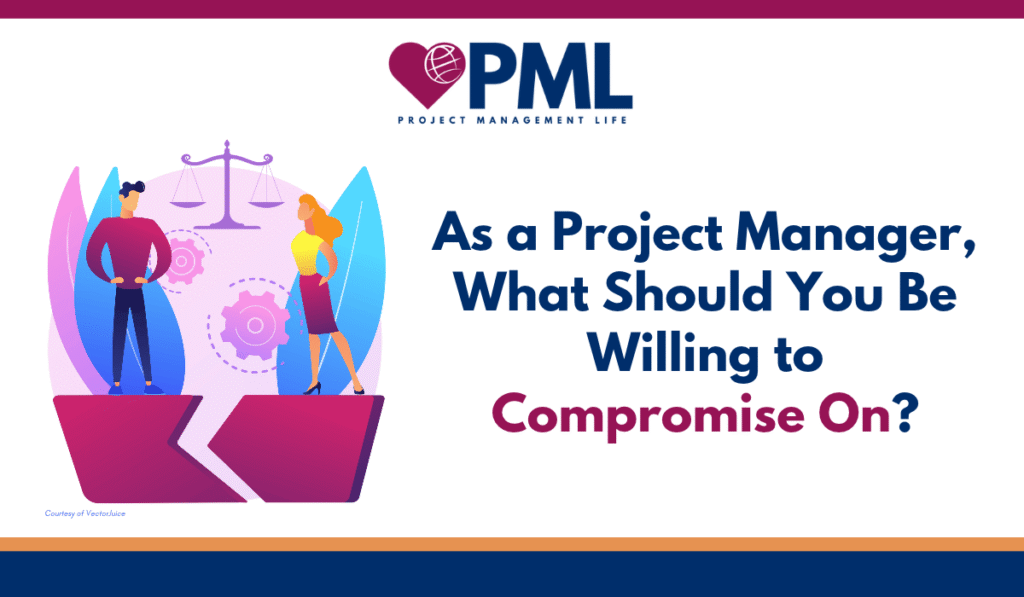

As a Project Manager, What Should You Be Willing to Compromise On?
One of the most important skills a project manager can develop is the ability to compromise effectively. I know by now you are already going, not another skill… Projects rarely unfold exactly as planned, and project managers must constantly tailor and balance competing priorities such as scope, schedule, budget, quality, stakeholder expectations, and resource availability. While maintaining focus on project objectives is essential, being unwilling to adapt can create unnecessary conflict, delays, and inefficiencies. Compromise enables PMs to navigate challenges, foster collaboration, and make informed trade-offs that support overall project success. Rather than being a sign of weakness, the ability to compromise demonstrates flexibility, emotional intelligence, and strategic leadership, all of which are critical for delivering value in today’s complex and fast-changing business environment. Let’s discuss key areas of compromise that every PM should consider.
Project management is often portrayed as a role focused on maintaining control, enforcing plans, and ensuring that projects are delivered exactly as envisioned. While discipline and structure are undoubtedly important, successful PMs understand that rigid adherence to every original plan is rarely practical. Yes… the best laid plans often go sideways. Every project operates within constraints of time, budget, resources, stakeholder expectations, and changing business priorities. As a result, compromise becomes one of the most valuable skills a PM can develop.
However, compromise does not mean lowering standards or abandoning objectives. Rather, it involves making thoughtful adjustments that help achieve the project’s overall goals while responding to real-world challenges. Knowing what to compromise on, and what to protect at all costs, can be the difference between project success and failure.
One area where PMs must often be willing to compromise is the project schedule. Deadlines are important, but unforeseen circumstances such as resource shortages, technical issues, regulatory changes, or shifting customer requirements can affect timelines. Effective PMs recognize when a schedule adjustment is necessary to ensure quality outcomes. Rather than forcing teams to meet unrealistic deadlines, they negotiate revised milestones and communicate changes transparently to stakeholders. A flexible approach to scheduling can reduce stress, improve team morale, and ultimately result in a better final product.
Another aspect that may require compromise is the project scope. Scope management is a constant challenge in most projects, particularly when stakeholders continue to request new features or functionalities. A project manager should be willing to compromise on non-essential requirements while maintaining focus on core business objectives. Instead of treating every stakeholder request as mandatory, they evaluate the value of each addition and determine whether it aligns with project goals. Strategic compromises on scope can help prevent delays, budget overruns, and unnecessary complexity.
Resource allocation is another area where compromise is often necessary. Rarely does a project receive all the personnel, equipment, or financial support originally requested, needed or required. PMs frequently need to work within limitations and make decisions about where resources will generate the greatest value. This may require scaling back certain activities, prioritizing critical tasks, or redistributing workloads across team members. By accepting and managing resource constraints rather than fighting them endlessly, PMs can maintain project momentum and deliver meaningful results.
A successful PM should also be willing to compromise on personal preferences and management styles. Every team consists of individuals with different working habits, communication styles, cultural backgrounds, and professional experiences. A leadership approach that works well with one team may not be effective with another. PMs who insist on managing everyone in the same way often create resistance and reduce engagement. Instead, adaptability and emotional intelligence allow them to adjust their methods to suit the needs of the team while still maintaining accountability and performance standards.
Methods and processes represent another common area for compromise. Many PMs have strong preferences for specific methodologies, whether Agile, Waterfall, Scrum, Kanban, or hybrid approaches. While methodologies provide valuable frameworks, projects should not become servants to the process. Sometimes organizational requirements, stakeholder expectations, or project complexity demand modifications to standard procedures. PMs who remain open to tailoring processes can improve efficiency and ensure that project practices support business outcomes rather than hinder them.
Stakeholder expectations frequently require careful compromise as well. Different stakeholders often have competing priorities. Executives may focus on cost control, customers may emphasize quality, while operational teams may prioritize usability and maintainability. It is rarely possible to satisfy every demand completely. Effective PMs act as negotiators who balance these interests and facilitate realistic expectations. Through communication, transparency, and prioritization, they find solutions that satisfy the most critical stakeholder needs while maintaining project feasibility.
Another important area for compromise is the level of detail in planning. While comprehensive planning is essential, excessive planning can delay execution and reduce responsiveness. Some PMs become overly focused on perfect plans, spending significant time trying to anticipate every possible scenario. In dynamic environments, however, flexibility often outweighs perfection. Compromising on the desire for complete certainty allows teams to move forward, gather information, and make informed adjustments as the project progresses.
PMs should also be prepared to compromise on authority and decision-making control. Successful projects rely on collaboration and collective expertise. Attempting to control every decision can create bottlenecks and reduce team engagement. Delegating responsibility to subject matter experts and empowering team members often leads to better decisions and faster execution. By sharing ownership, PMs foster trust, build stronger teams, and create an environment where innovation can thrive.
Communication style is another dimension where compromise can be beneficial. Different audiences require different levels of information. Senior executives may prefer concise summaries, while technical teams need detailed explanations. A PM who insists on a single communication format risks misunderstanding and inefficiency. Adjusting communication methods based on audience needs helps ensure alignment and improves stakeholder satisfaction throughout the project lifecycle.
Despite the importance of compromise, there are certain areas where PMs should remain firm. Ethical standards, legal compliance, safety requirements, and organizational values should never be sacrificed for convenience or speed. Similarly, compromising product quality beyond acceptable standards can damage reputation, customer trust, and long-term business success. The key is understanding the difference between flexible elements of a project and fundamental principles that must be protected.
Ultimately, effective project management is not about winning every argument or enforcing every original plan. It is about guiding a project toward successful outcomes in an environment filled with uncertainty, competing interests, and changing priorities. The most successful PMs understand that compromise is not a sign of weakness but a demonstration of strategic thinking and leadership maturity. By being willing to adjust schedules, scope, resources, processes, communication approaches, and management styles, when necessary, they increase the likelihood of project success while maintaining stakeholder confidence and team engagement.

PML would like to extend a huge thank you to Sylvie Edwards for sharing her knowledge and wisdom with the PML community! Learn more about her below and reach out to connect!
About the Author
For those who don’t know Sylvie Edwards, she has been involved in Project Management in several industries for the past 25+ years. Sylvie previously worked for a top 5 Consulting Firm, where she oversaw projects in the IT, Banking, Health, Government and Securities sectors as well as a Manager in the Risk Management practice.
Sylvie went on to establish her own consulting practice assisting organizations in establishing processes, strategies and developing methodologies. She was instrumental in the development of methodologies for the creation of PMOs as well as for the evaluation, assessment and review of projects in peril.
Sylvie is currently a professor and the coordinator for the Project Management Certificate Program at Durham College. She previously taught at the University of Toronto continuing studies department, assisting hundreds of potential PMP® achieve their certification. She is a frequent lecturer, presenter and blogger (PMWorld360°, ProjectBites, LinkedIn) on all things related to project management. She holds several certifications and has the honour of having been named Fellow of the Project Management Association of Canada (FPMAC).
Sylvie’s involvement with PMI® is long standing including over 12 years on the Board of Directors of the local Chapter where she led initiatives in education, mentoring and held the role of President for two terms. She recently accepted a role back on the BOD for PMI-DHC while still volunteering by becoming their resident “bookworm”, helping people find great reads to supplement their learning about Project Management and everything connecting to it.
If you see her at an event, say hello and get to know her!
Connect directly with Sylvie on LinkedIn at: https://www.linkedin.com/in/sylvie4sresolutions/
Interested in becoming a PML Contributor?
Project Management Life (PML) is a volunteer team of 🔥passionate project managers🔥 who believe in the *power of this incredible profession* and we provide our knowledge, guidance, and support to all our project management colleagues within the PML Community.
If you’re interested in:
1️⃣ Growing your personal brand
2️⃣ Sharing your knowledge with your project management colleagues
3️⃣ Supporting the growth of the PML Community and growing our tribal knowledge together
…then we want to hear from you! It’s a win-win-win scenario!
YOU GET FULL CREDIT! We’ll celebrate your contributions, share your socials, etc. so you can grow your personal brand and build up your following as well! Plus you can collect PDUs for your volunteer and content creation hours!
Message us or send us an email at info@projectmanagementlife.org if you’re interested, and let us know! We can’t wait to hear from you!
Who is Project Management Life (PML)?
Project Management Life (PML) is a growing community focused on helping project leaders build sustainable performance through community, content, virtual retreats, courses, and transformational learning experiences.
We share exclusive content around project management, career and personal branding, health and well-being, self-care, and so much more. PML offers a space to connect, recharge, and discover new ways to live your best life.
We founded PML on the idea that we can inspire each other with stories of success and valuable lessons learned, empower each other with career advice and resources to thrive both personally and professionally, and support each other to achieve a fulfilling work-life balance and focus on our health and well-being.
By living our best life, we bring our best selves to our projects, our teams, our loved ones, and the world.
Join the PML Community
The PML Community is a community of project managers and like-minded professionals supporting each other. Whether you’re a new or experienced project manager, this is a place where we can connect, learn, celebrate, and support one another.
The PML Community Newsletter is free, and jam-packed with exclusive content about project management, career growth and personal branding, health and well-being, personal self-improvement, professional development, work-life balance, and more. If you’re ready to go deeper with PML, we also have our PML Membership if you’re looking for more great content to live your best life. Check out our PML Membership page to learn more.
Join us today, and don’t miss out!
Share this Blog Post:
Standard PML Contributor Disclaimer: The views, thoughts, and opinions expressed in this PML Contributor guest post are solely those of the author and may or may not reflect the views of Project Management Life. We appreciate the many diverse perspectives shared by our contributors as part of our commitment to fostering insightful discussions within the PML Tribe Community.
Check out some of PML’s other blog posts:
- To the Project Managers Who Make It Happen: This One’s For You
- The Sustainable Workweek: 5 Small Changes That Make a Big Difference
- Boundaries as a Performance Tool: A Sustainable Guide for Neurodivergent Project Managers
- The Invisible Cost of Being the Person Everyone Depends On
- Leading Under Pressure Without Burning Out
- How Project Managers Can Avoid Burnout (Without Sacrificing Performance)
- An Introduction to Sustainable Performance: Why Project Leaders Need a New Way to Think About Performance
- Setting the Year Up for Success: How Project Managers Can Set Personal Goals and Resolutions
- A Thankfulness List for Project Managers
- Celebrating Project Managers: Building the Past, Shaping the Future
- “Great Communicator” is Written on Your Resume – But Does the Hiring Manager Reviewing it Agree?
- Fun Ways to Sneak Exercise into Your Busy Day: Let’s Get Moving, Project Managers!
- The Power of Focus: How Project Managers Get More Done in Less Time and Avoid Burnout
- Leveraging Storytelling: How Your Project Management Resume Can Stand Out and Shine
- Salary Negotiation for Project Managers: How to Not Leave Money on the Table
- Developing a Great Meeting Agenda: A Project Manager’s Essential Tool for Leading Effective Meeting Discussions
- From Chaos to Calm: How Project Managers Can Manage Stress (and Avoid Burnout)
- How to Manage a Project: A Step-by-Step Guide to Leading a Project from Start to Finish
- Smart Snacking: Healthy Snack Options for Busy Project Managers On-the-Move
- Breaking into Project Management: How to Find Your First, Entry-Level Project Manager Role
- The Secrets to a Strong Project Kick-Off Meeting: How to Effectively Launch Your Next Project