This Collaboration Was Brought To You By:
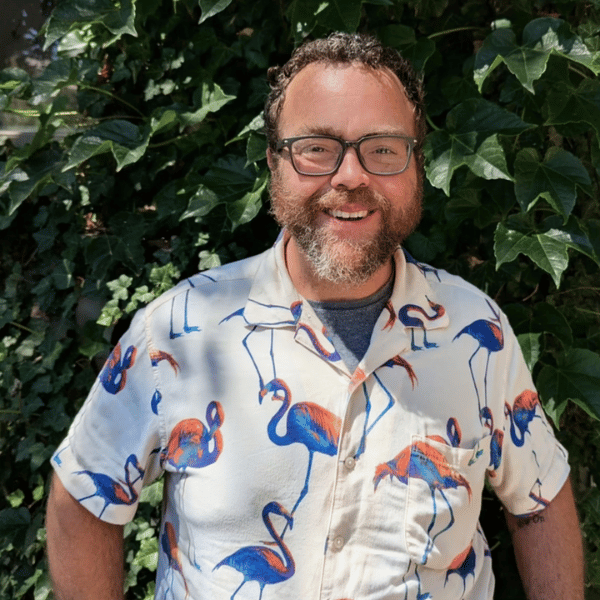

Dr. Casey LaFrance
Professor, Researcher, Author, and International Trainer, Awesome Dad, and Friend of PML
Natalie Berkiw-Scenna, PMP
Founder, Project Management Life®
Boundaries as a Performance Tool: A Sustainable Guide for Neurodivergent Project Managers
We Talk About Burnout. We Don’t Talk Enough About What Comes Before It.
Project management has always been a profession that benefits from diverse ways of thinking.
Some project leaders excel at seeing patterns others miss. Some bring remarkable creativity to solving complex problems. Others thrive in ambiguity, ask thoughtful questions that challenge assumptions, or recognize risks long before they appear on a dashboard. Every team benefits when people bring different perspectives, experiences, and ways of processing information to the table.
Neurodivergent project managers contribute to these strengths, and countless others, to our profession every day. As organizations increasingly recognize the value of cognitive diversity, the conversation is beginning to shift. Rather than asking how neurodivergent professionals can simply adapt to existing workplace expectations, we’re beginning to ask a better question:
How can we create environments where people with different ways of thinking, communicating, and experiencing the world can do their very best work.
That question is at the heart of this collaborative article.
Because while neurodivergent professionals bring tremendous value to organizations, many also carry an invisible workload that often goes unrecognized.
Every project manager knows what it feels like to carry invisible work.
It’s the conversation with a stakeholder that keeps replaying in your mind after you’ve logged off for the day.
It’s remembering the risk no one else has thought about yet.
It’s mentally preparing for tomorrow’s steering committee while responding to today’s production issue.
It’s balancing schedules, budgets, personalities, competing priorities, organizational politics, and dozens of decisions that never appear on a project plan or a status report.
As good project managers, we don’t simply manage projects.
We manage complexity.
And much of that work is invisible.
Now, imagine carrying all of that while your brain is also working overtime processing the environment around you.
Perhaps the open office is so noisy that concentrating requires constant effort.
Perhaps every Teams message and notification immediately pulls your attention away from what you were trying to finish.
Perhaps meetings move so quickly that you’ve already missed three opportunities to contribute because you’re still processing the first question.
Or perhaps you’ve spent years learning how to adjust your communication style, monitor your body language, or suppress natural behaviors simply to fit into workplace expectations.
By the end of the day, you haven’t just managed projects.
You’ve managed your environment. Your attention. Your energy. And perhaps, you’ve spent part of the day managing how much of yourself you felt comfortable bringing to work.
For many neurodivergent project managers, this invisible work is part of everyday life.
It’s also one of the reasons why conversations about boundaries deserve to become much richer than simply learning how to say “no.”
Rethinking What Boundaries Really Are
When people hear the word boundaries, they often picture declining another meeting, ignoring an email after hours, or politely saying no to one more request.
Those are certainly examples of healthy boundaries.
But they only tell part of the story.
Project Management Life views boundaries through the lens of sustainable performance.
Boundaries aren’t simply limits we communicate to other people. They’re systems we create to protect the resources that make great leadership possible.
Those resources include our attention, our energy, and our capacity.
Dr. Casey LaFrance’s work offers another essential piece of the puzzle. His research and advocacy help us understand that neurodivergent professionals may expend significant mental and emotional resources in ways that often go unseen. Processing sensory information, adapting communication styles, navigating social expectations, or masking natural behaviors all require energy. They are forms of work, even if they don’t appear on a task list or project schedule.
When we combine these perspectives, a different picture of boundaries begins to emerge.
Boundaries aren’t about contributing less.
They’re about protecting the conditions that allow us to contribute sustainably.
How We Got Here
The conversation around neurodiversity has evolved significantly over the past several decades.
Historically, disability was often viewed through a medical lens, something to be diagnosed, treated, or corrected. Over time, advocates began shifting that perspective toward a social model of disability, recognizing that many barriers that people experience are created not by the individuals themselves, but by environments that were never designed with diverse ways of thinking, communicating, and processing the world in mind.
Legislation such as the Rehabilitation Act of 1973 and later the Americans with Disabilities Act (ADA) of 1990 represented important milestones by establishing legal protections against discrimination and requiring reasonable accommodations in schools, workplaces, and public spaces.
More recently, the neurodiversity movement has encouraged us to move beyond asking “How do we help people fit into existing systems?” and instead ask “How can we build systems that recognize and support different ways of thinking?”
That distinction is important.
Because sustainable performance isn’t achieved simply by asking individuals to adapt more effectively.
It’s also achieved by creating environments where fewer unnecessary adaptations are required.
The Work That Never Appears on the Project Plan or Status Report
One of the greatest misconceptions about project management is that our work can be measured solely by deliverables.
The project schedule shows milestones. The budget tracks costs. The RAID log captures issues and risks. But none of those tools measure the invisible work of leadership.
Every day, project managers regulate emotions during difficult conversations. They navigate ambiguity, absorb pressure from sponsors, help team members through conflict, switch between dozens of competing priorities, and make hundreds of small decisions that keep projects moving forward.
Dr. Casey encourages us to recognize that neurodivergent professionals may be carrying another layer of invisible work alongside these responsibilities.
That work might include translating vague requests into concrete actions, filtering overwhelming sensory input, consciously monitoring social interactions, deciding when to ask clarifying questions, or continuing to process complex discussions long after meetings have ended.
None of these efforts appear on a timesheet. Yet each one consumes cognitive capacity.
Recognizing this invisible work changes the conversation.
Instead of asking, “Why are you tired?” we begin asking, “What demands have been placed on your brain today that no one else could see?“
That shift matters.
Because we cannot protect resources we fail to acknowledge.
Communication Boundaries Create Better Thinking
One assumption quietly shapes many modern workplaces. We expect everyone to process information the same way. We reward the fastest response. The quickest answer. The person who speaks first during brainstorming sessions.
But different brains process information differently.
Some people think out loud. Others think deeply before they speak. Some process verbally. Others organize their thoughts through writing.
Some contribute their best ideas during the meeting. Others contribute their best ideas after they’ve had time to reflect.
Neither approach is better. They’re simply different.
One of Dr. Casey’s most valuable insights is that creating communication flexibility often allows people to contribute more effectively, not less effectively.
For project managers, this might look like requesting agendas in advance, asking for written follow-up after complex discussions, or building time into important decisions before responding.
From the PML perspective, these aren’t accommodations that reduce performance.
They’re boundaries that improve decision quality.
After all, project management has never been about responding first.
It’s about making thoughtful decisions that move projects forward.
Sometimes the strongest leadership response is:
“I’d like some time to think through this before offering my recommendation.”
Capacity Is More Than Calendar Space
One of the ideas PML teaches in the Sustainable Performance Framework is that available time does not automatically equal available capacity.
Just because your calendar has an open hour doesn’t mean your brain has another hour of deep thinking available.
Project managers spend enormous amounts of cognitive energy solving problems, making decisions, navigating conflict, planning work, and switching between competing priorities.
Dr. Casey’s work reminds us that for many neurodivergent professionals, additional demands may also be competing for those same cognitive resources.
- Transitions between tasks.
- Filtering distractions.
- Managing sensory environments.
- Adapting communication.
- Processing social interactions.
Those demands deserve to be recognized as real work.
When we begin viewing capacity through this lens, boundaries become less about protecting our calendars and more about protecting our cognitive bandwidth.
Perhaps that means declining an unnecessary meeting.
Perhaps it means scheduling focus time.
Perhaps it means reducing context switching.
Or perhaps it simply means acknowledging that after several hours of emotionally demanding conversations, your brain genuinely needs recovery before tackling strategic work.
Protecting capacity isn’t a luxury.
It’s what allows high-quality thinking to continue tomorrow.
The Boundary We Rarely Talk About: Sensory Capacity
One of the most overlooked aspects of workplace performance is sensory load.
- Lighting
- Noise.
- Visual clutter.
- Constant notifications.
- Crowded meeting rooms.
- Back-to-back video calls.
Many people barely notice these things. Others expend tremendous mental effort simply filtering them out.
Dr. Casey encourages organizations to recognize that sensory needs aren’t preferences.
They’re often directly connected to attention, emotional regulation, and performance.
When we connect this with sustainable performance, something becomes clear.
Our nervous systems are resources too.
- A quieter workspace.
- Noise-cancelling headphones.
- Five minutes between meetings.
- Stepping outside after an emotionally intense conversation.
- Turning off unnecessary notifications.
These aren’t small comforts. They’re recovery strategies.
They’re boundaries that protect our ability to continue leading well throughout the day.
Inclusive Spaces Are Successful Even When They’re Quiet
One of Dr. Casey’s most thought-provoking observations is that sensory-friendly spaces are often misunderstood.
Organizations sometimes evaluate the success of sensory rooms by asking a simple question:
“How many people used the room?”
On the surface, that sounds reasonable.
But it may actually miss the point.
Think about accessible parking spaces. Their value isn’t measured by whether they’re occupied every hour of every day. They’re valuable because they’re available when someone needs them.
In fact, if every accessible parking space were constantly full, we’d probably conclude there weren’t enough of them.
Sensory rooms serve a remarkably similar purpose.
Their success isn’t measured by maximizing usage. Their success is measured by providing psychological safety and support when people need a place to regulate, decompress, recover, or reduce sensory overload.
Sometimes the greatest value of a resource comes from simply knowing it’s available.
That changes how people experience the workplace.
It communicates something powerful:
“You belong here exactly as you are, and we’ve intentionally created an environment that supports your success.”
That message extends well beyond neurodivergent employees.
Project managers spend much of their careers operating under sustained pressure.
- Quiet spaces.
- Recovery rooms.
- Flexible work environments.
- Meeting-free focus time.
These are examples of organizational boundaries. They’re systems that protect people before individuals are forced to protect themselves.
Perhaps the most sustainable organizations are those that don’t rely exclusively on employees to set better boundaries.
Instead, they design environments that naturally support healthier ways of working.
When Adaptation Becomes Exhaustion
Perhaps one of the most powerful ideas in Dr. Casey’s work is the concept of masking.
Many neurodivergent professionals spend years adapting themselves to workplace expectations:
- Monitoring eye contact.
- Suppressing natural behaviors.
- Carefully choosing how much enthusiasm to show.
- Wondering whether they’re talking too much. Or not enough.
- Rehearsing conversations before they happen.
- Replaying conversations after they’ve ended.
- Trying to appear relaxed while internally managing dozens of competing inputs.
Masking may help someone navigate professional environments. But it often comes at a cost.
When adaptation becomes constant, it consumes energy that could otherwise be spent solving problems, building relationships, or leading projects.
At Project Management Life, we often say that sustainable performance isn’t about asking people to become more resilient so they can tolerate unhealthy systems indefinitely.
It’s about creating healthier systems that require less unnecessary resilience in the first place.
Perhaps one of the healthiest boundaries we can establish is giving ourselves permission to stop believing that effective leadership requires constant adaptation.
Professionalism doesn’t require pretending to have a different brain.
Practical Boundaries That Protect Sustainable Performance
So, what might this look like in everyday project management?
It may sound like:
- “Could we send the agenda ahead of time so I can come prepared?”
- “I’d like to think through that before making a recommendation.”
- “Can we summarize the decisions in writing?”
- “I’m currently at capacity. Which priority would you like me to focus on first?”
- “I’m protecting this afternoon for focused work so I can deliver this on time.”
- “Let’s schedule ten minutes between these meetings so everyone has time to reset.”
These aren’t signs of weakness. They are examples of thoughtful leadership.
Every one of these boundaries protects attention, energy, capacity, or cognitive resources, the very things that make sustainable performance possible.
A New Definition of Success
For decades, our profession has focused on improving how projects are delivered.
We’ve built:
- Better methodologies.
- Better governance.
- Better scheduling tools.
- Better reporting.
Those advances matter.
But perhaps the next evolution of project management isn’t just about improving how we manage projects.
Perhaps it’s improving how we sustain the people managing them.
Dr. Casey LaFrance’s work reminds us that neurodivergent professionals often experience workplaces in ways that remain largely invisible to others. At the same time, they bring valuable strengths, perspectives, and ways of thinking that enrich our teams, strengthen decision-making, and foster innovation.
PML’s Sustainable Performance Framework reminds us that every project leader, regardless of how they experience and process the world, has finite attention, finite energy, and finite capacity.
Together, those perspectives point us toward a different definition of high performance.
High performance isn’t constant availability. It isn’t immediate responsiveness. And it isn’t sacrificing recovery in the name of productivity.
True high performance is sustainable.
It’s built by protecting the conditions that allow people to think clearly, lead effectively, recover intentionally, and contribute meaningfully over the course of an entire career.
Perhaps the future of project management isn’t simply about building better schedules or stronger governance.
Perhaps it’s about building workplaces where different ways of thinking are recognized as assets rather than obstacles.
Where communication flexibility leads to better decisions. Where sensory-friendly environments support sustained focus. Where healthy boundaries are respected because they enable people to perform at their very best. And where cognitive diversity is recognized as a source of creativity, resilience, and better problem-solving.
When organizations intentionally recognize and celebrate the strengths neurodivergent professionals bring, and create environments where those strengths can flourish, they don’t just support neurodivergent employees. They build healthier, more adaptive, and more sustainable workplaces for everyone.
Because the ultimate goal isn’t simply helping people fit into existing systems.
It’s creating systems where more people have the opportunity to thrive.
Because boundaries were never about limiting your contribution.
They’ve always been about protecting the person making that contribution possible.
PML would like to extend a huge thank you to Dr. Casey LaFrance for collaborating and sharing his knowledge and wisdom with the PML community! Learn more about him below and reach out to connect!
About the Authors:
Dr. Casey LaFrance is a professor of political science, researcher, author, and international trainer specializing in project management, organizational change, public administration, and sustainability. His work bridges academic research and professional practice, helping organizations improve decision-making, stakeholder engagement, governance, and valued delivery. Casey is the author of Listening for Value and Targeting Discretion and has led training and consulting initiatives with universities, nonprofits, government agencies, and international partners. His research explores how people create, interpret, and exchange value across projects, programs, and communities, with a particular focus on neuroinclusive communication, evidence-based management, and regenerative leadership. Holding numerous professional certifications across project management, quality, change management, sustainability, and AI, Casey is committed to translating complex ideas into practical tools that improve outcomes. Whether teaching in the classroom, facilitating workshops, or speaking at conferences, he is passionate about equipping leaders with approaches that strengthen organizations while creating lasting value for the people and communities they serve.
Natalie Berkiw-Scenna, PMP, is the Founder of Project Management Life® (PML), a community and platform dedicated to helping project leaders lead, perform, and live their best life. With a passion for redefining what high performance looks like in today’s demanding work environments, Natalie brings a human-centered approach to modern project leadership that values both results and well-being.
Drawing from 25 years of experience leading complex projects and working with diverse teams, Natalie helps project professionals navigate pressure, complexity, and constant change with greater clarity, resilience, and intention. Her work empowers leaders to move beyond reactive ways of working and toward more sustainable approaches to performance.
Reach out to Natalie on LinkedIn or follow the PML LinkedIn page here.

Who is Project Management Life® (PML)?
Project Management Life® (PML) is a growing community focused on helping project leaders build sustainable performance through community, content, virtual retreats, courses, and transformational learning experiences.
We share exclusive content around project management, career and personal branding, health and well-being, self-care, and so much more. PML offers a space to connect, recharge, and discover new ways to live your best life.
We founded PML on the idea that we can inspire each other with stories of success and valuable lessons learned, empower each other with career advice and resources to thrive both personally and professionally, and support each other to achieve a fulfilling work-life balance and focus on our health and well-being.
By living our best life, we bring our best selves to our projects, our teams, our loved ones, and the world.
Join the PML Community
The PML Community is a community of project managers and like-minded professionals supporting each other. Whether you’re a new or experienced project manager, this is a place where we can connect, learn, celebrate, and support one another.
The PML Community Newsletter is free, and jam-packed with exclusive content about project management, career growth and personal branding, health and well-being, personal self-improvement, professional development, work-life balance, and more. If you’re ready to go deeper with PML, we also have our PML Membership if you’re looking for more great content to live your best life. Check out our PML Membership page to learn more.
Join us today, and don’t miss out!
Share this Blog Post:
Check out some of PML’s other blog posts:
- The Invisible Cost of Being the Person Everyone Depends On
- Leading Under Pressure Without Burning Out
- How Project Managers Can Avoid Burnout (Without Sacrificing Performance)
- An Introduction to Sustainable Performance: Why Project Leaders Need a New Way to Think About Performance
- Setting the Year Up for Success: How Project Managers Can Set Personal Goals and Resolutions
- A Thankfulness List for Project Managers
- Celebrating Project Managers: Building the Past, Shaping the Future
- “Great Communicator” is Written on Your Resume – But Does the Hiring Manager Reviewing it Agree?
- Fun Ways to Sneak Exercise into Your Busy Day: Let’s Get Moving, Project Managers!
- The Power of Focus: How Project Managers Get More Done in Less Time and Avoid Burnout
- Leveraging Storytelling: How Your Project Management Resume Can Stand Out and Shine
- Salary Negotiation for Project Managers: How to Not Leave Money on the Table
- Developing a Great Meeting Agenda: A Project Manager’s Essential Tool for Leading Effective Meeting Discussions
- From Chaos to Calm: How Project Managers Can Manage Stress (and Avoid Burnout)
- How to Manage a Project: A Step-by-Step Guide to Leading a Project from Start to Finish
- Smart Snacking: Healthy Snack Options for Busy Project Managers On-the-Move
- Breaking into Project Management: How to Find Your First, Entry-Level Project Manager Role
- The Secrets to a Strong Project Kick-Off Meeting: How to Effectively Launch Your Next Project
Disclosure: This article may provide links to products or services that PML feels would be beneficial to our fellow project management colleagues and friends. In some cases, PML may be compensated for purchases made, at no cost to you. This is used to support the growth of the PML Community and website, and we promise to continue to provide valuable content as we grow.